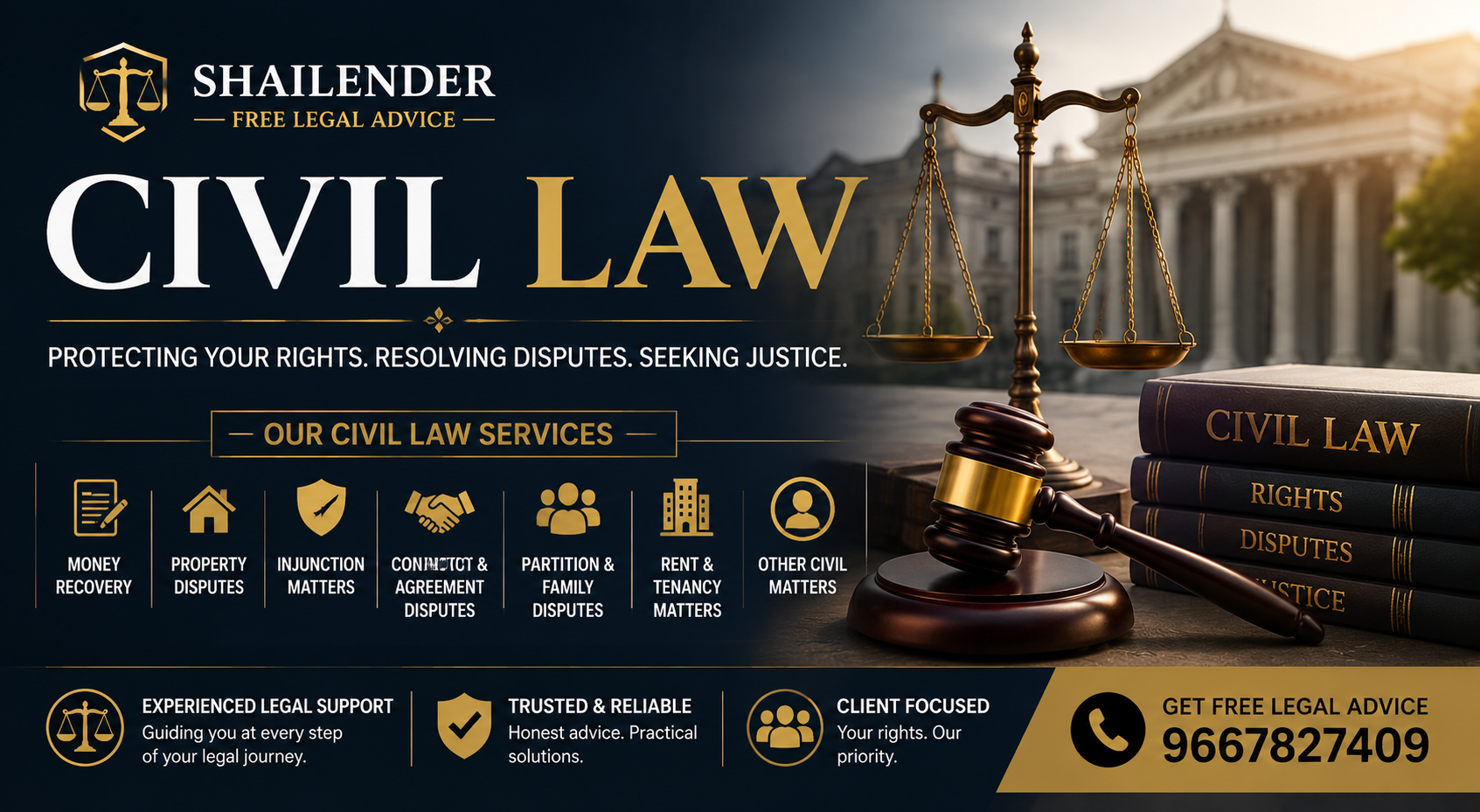
Civil law deals with disputes between individuals, businesses, organizations, and other entities. Unlike criminal law, civil cases generally involve the enforcement of legal rights, recovery of money, property disputes, contractual obligations, and other private legal matters.
If you are facing a civil dispute, understanding your legal rights and available remedies is essential for protecting your interests.
What Is Civil Law?
Civil law governs disputes where one party seeks legal relief, compensation, recovery, or enforcement of a legal right against another party. Civil cases are usually decided by Civil Courts based on evidence, documents, and applicable laws.
Common civil matters include:
- Money recovery suits
- Contract disputes
- Property disputes
- Injunction matters
- Rent and tenancy disputes
- Recovery of possession
- Consumer disputes
- Partnership disputes
- Specific performance cases
- Declaration suits
- Family property disputes
- Business and commercial disputes
Money Recovery Matters
A money recovery suit may be filed when a person, company, or business fails to repay an outstanding amount that is legally due.
Common examples include:
- Friendly loans
- Business transactions
- Unpaid invoices
- Outstanding payments
- Breach of agreements
- Recovery of professional fees
Proper documentation such as agreements, invoices, receipts, bank records, and communications can be important evidence in such cases.
Property Disputes
Property disputes are among the most common civil matters. These disputes may arise regarding ownership, possession, inheritance, partition, boundaries, tenancy, or unauthorized occupation.
Legal remedies may be available depending on the facts and circumstances of each case.
Injunction Matters
An injunction is a court order that may restrain a person from performing a particular act or may require certain actions to be taken.
Injunctions are commonly sought in matters relating to:
- Property disputes
- Illegal construction
- Possession disputes
- Contractual obligations
- Business conflicts
Timely legal action can often be important in injunction matters.
Contract and Agreement Disputes
When parties enter into a legally valid agreement, each party is generally expected to perform their obligations.
Disputes may arise due to:
- Non-payment
- Breach of contract
- Failure to deliver services
- Violation of agreed terms
- Commercial disagreements
Legal remedies may include compensation, recovery of money, or enforcement of contractual obligations.
Importance of Legal Documentation
Proper documentation can significantly strengthen a civil case. Important documents may include:
- Agreements and contracts
- Receipts and invoices
- Property documents
- Bank statements
- Legal notices
- Correspondence and communications
- Business records
Maintaining accurate records can help establish legal rights and claims before the court.
Why Seek Legal Guidance?
Civil litigation can involve complex procedures, legal notices, court filings, evidence, and hearings. Professional legal guidance can help you:
- Understand your legal rights
- Evaluate available remedies
- Prepare necessary documentation
- Follow proper court procedures
- Protect your financial and property interests
Free Legal Advice
At Shailender Singh Free Legal Advice, we provide general legal information and guidance relating to civil law matters, including recovery suits, property disputes, contractual disputes, injunction matters, and other civil proceedings.
Our objective is to help individuals understand the legal process and make informed decisions regarding their legal rights.
Need Legal Assistance?
If you are facing a civil dispute involving money recovery, property issues, agreements, tenancy matters, or other civil claims, seeking timely legal guidance can help you understand the appropriate legal course of action.
No responses yet